
Arrest Records in Garfield County
The Garfield County Sheriff's Office is the principal countywide arrest and jail custodian. Panguitch, Escalante, and Tropic rely on Sheriff services rather than a standalone city police records portal. Other agencies can make or start an arrest here. Utah Highway Patrol, the Division of Wildlife Resources, Utah State Parks, and federal land officers may create their own reports. The Sheriff may hold only the booking record or an assisting-agency report when another agency began the case.
Garfield County arrest records form a chain. The arresting agency creates the incident and arrest report. The Garfield County Jail creates a separate intake record when a person is booked. Fingerprint-supported data may move to the Utah Bureau of Criminal Identification. A prosecutor may later file a court case, and a judge records probable cause, bond, hearings, and disposition. Charges can change at each stage.
Garfield County Arrest Roster Is Gone
The former official Garfield County booking page returned a 404 during the source review. No functioning official public jail roster or current-booking interface was located. That absence should not send a searcher to a commercial mugshot site. The sound fallback is to call the Garfield County Jail at 435-676-2678, confirm the person's full spelling and SO number if available, and then use the Sheriff GRAMA process for releasable booking material that staff cannot provide by phone.
Garfield County Sheriff and Jail
375 North 700 West
Panguitch, UT 84759
435-676-2678
Call for current custody, booking identifiers, and the confirmed mailing route.
The official Utah jail-contract report documents Garfield's capacity and programs. The online gap affects only the easy public roster route. It does not mean Garfield County stopped creating booking records or that a past booking can be inferred from a current custody list.
Garfield County Arrest Lookups
Start with the office that created the specific record. No single Garfield County arrest lookup covers every arrest, filed charge, and disposition. A complete search may require calls, a written request, a court search, and a subject-only state review. Use these official channels in order, while adjusting the first step when the originating agency is known.
- Call the Garfield County Jail at 435-676-2678 for recent custody. Ask for the correct name spelling, booking status, and SO number.
- Request the arrest or incident report from the agency that created it. Use Sheriff GRAMA for Sheriff records, but send UHP, DWR, Parks, or federal requests to those agencies.
- Search Utah Courts Xchange after a prosecutor files charges. Choose District Court for felonies and class A misdemeanors, or the proper justice court for lower-level matters.
- Use UDC Offender Search for sentenced state custody or state supervision, and Utah VINE for custody and release notifications. Neither replaces a county booking record.
- For one's own fingerprint-supported Utah history, use BCI Right of Access. Utah does not offer the public a BCI name search for another person's rap sheet.
If Xchange has no case, that may mean the filing has not occurred, no charge was filed, the wrong court was searched, or the case is nonpublic. It does not erase the agency report or booking record.
Garfield County Arrest GRAMA Requests
The Sheriff publishes a dedicated GRAMA records-request route instead of naming a separate records division. A useful request identifies one record family. Ask for an incident report, arrest report, booking sheet, custody or release log, specific video, photographs, or releasable warrant information. Add the approximate date, time, place, agency, and any incident, citation, case, or SO number already known.
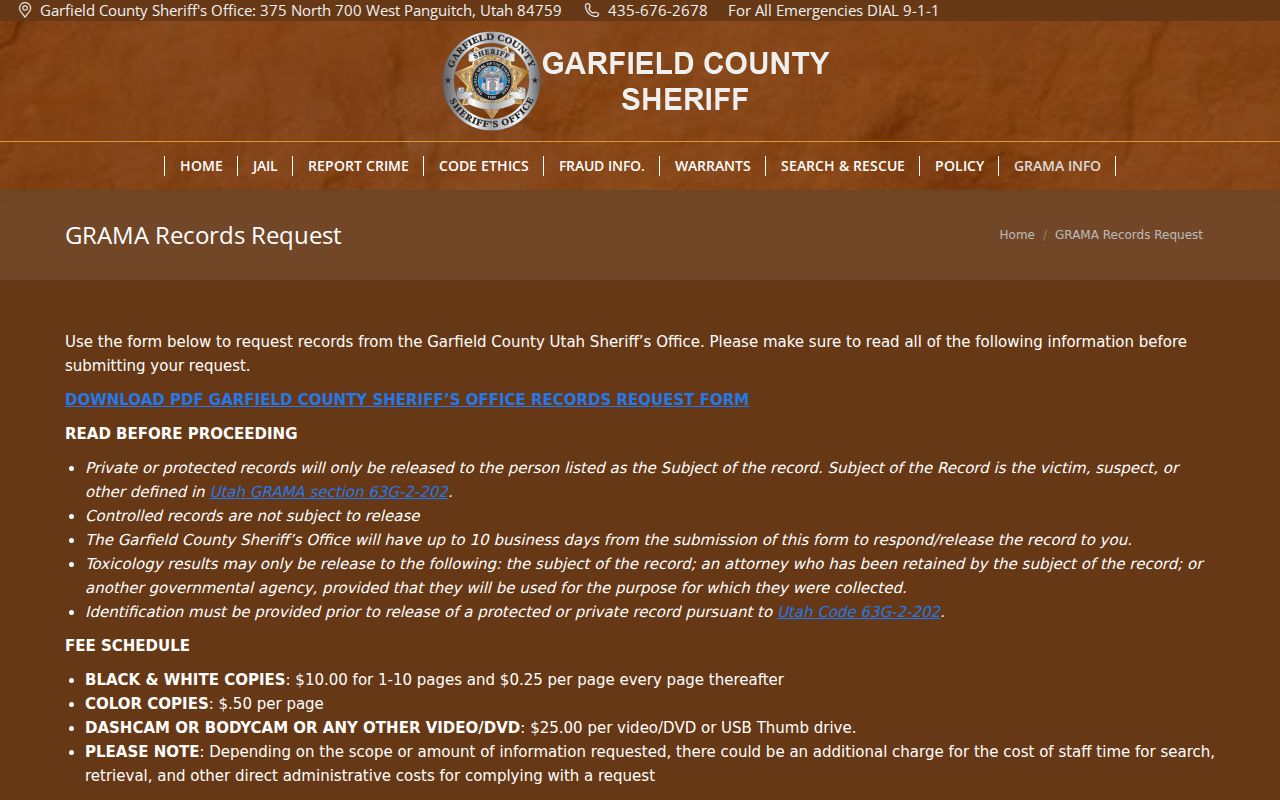
The official instructions give Garfield County arrest record seekers a working route when the jail roster is unavailable.
The local Sheriff GRAMA form states a general ten-business-day response period. That is an outside response frame, not a promise that all pages arrive within ten days. Classification review, clarification, and extraordinary circumstances may affect production. Request an estimate and ask for electronic inspection when possible. The form itself becomes a public record, so ask how to transmit identification securely when claiming access to private or protected material.
Arrest Records: What They Contain
A Garfield County arrest record may contain facts from both the field event and jail intake. The Sheriff form invites a precise description because these items are not one undifferentiated file. Request the fields tied to the question, then compare them with the later court case rather than assuming that the booking charge stayed the same.
| Arrest event | Date, time, location, arresting officer, agency, and the stated basis for custody. |
|---|---|
| Agency identifiers | Incident, citation, warrant, or agency report number. |
| Booking identity | Booking time, SO number, identifying details, and Garfield County Jail intake data. |
| Alleged charges | Statutes and offense levels known at arrest or intake, which may change after prosecutor review. |
| Custody and release | Housing status, bond information, release date, or transfer details when releasable. |
| Report narrative | The arresting agency's account of the alleged event, subject to redaction and access limits. |
| Booking photograph | Release is restricted by Utah law in publish-for-pay and protected situations; availability must not be assumed. |
Victim details, juvenile material, medical facts, personal identifiers, and active-investigation information may be redacted or withheld. Controlled records are not released. Private or protected records require proof of subject or authorized status.
Garfield County Arrest Agency Split
The agency named on the arrest is the best clue to the report custodian. A Sheriff arrest points to the Garfield County GRAMA route. UHP or DPS reports stay with the state public-safety agency. DWR and Utah State Parks keep reports they create. A National Park Service matter may also create a federal case record, distinct from a Garfield County filing.
| Origin | Ask for | Do not expect |
|---|---|---|
| Garfield County Sheriff | Incident, arrest, booking, and releasable jail records | A court's final judgment |
| UHP, DWR, or State Parks | The creating agency's incident or arrest report | A full Sheriff narrative when the Sheriff only assisted |
| Federal ranger | Creating agency report and any federal court case | An automatic Garfield County case |
The clerk and Sheriff divide responsibilities in the same way. A court clerk is not the usual holder of an officer narrative, though a report might later appear as a filed exhibit. The Sheriff does not replace the clerk for pleas, dispositions, judgments, or certified court copies.
Recent Garfield County Bookings
With no working official public booking list, the Garfield County Jail phone is the immediate route for current custody. A caller should ask only for information staff can lawfully confirm. The SO number is especially useful because jail mail and record requests may rely on it. For written proof or more detail, follow with a narrow GRAMA request.
Utah VINE offers free, around-the-clock custody and release notification. The official Utah victim notification page explains that service.
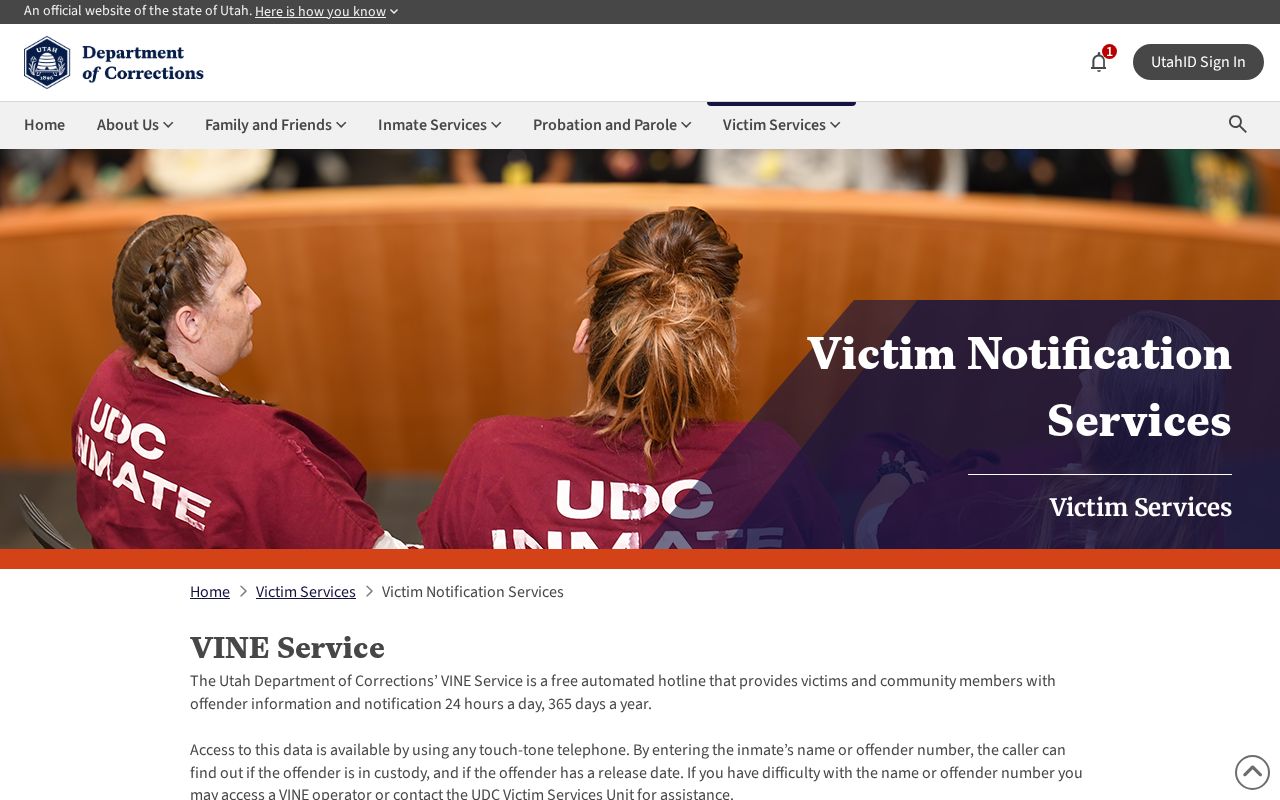
VINE can track custody events, but it is not a complete Garfield County arrest history or a substitute for the booking sheet.
A current roster, even if restored, would show only its defined custody window. Entries can roll off after release. Some arrests do not result in jail admission, and older events may not be visible. Absence from a current log proves neither that an arrest never occurred nor that a filed case does not exist.
Garfield County Arrests Reach Court
The move from arrest to court is not one automatic data entry. Garfield County Jail records the intake and can collect fingerprints and a booking photograph. Fingerprint-supported arrest data may enter the BCI repository. A prosecutor then decides what, if anything, to file. Court staff enter public case events into CORIS, which supplies Xchange. Thus, Xchange can update promptly after staff entry while still showing nothing right after the arrest.
Agency Arrest → Garfield Booking → Prosecutor Review → Court Filing → CORIS/Xchange → Disposition Reporting
Missing fingerprints, identifier differences, reporting lag, and an unreported disposition can create gaps between sources. For one's own Utah record, BCI Right of Access is the authoritative state-history route. When that history is wrong or incomplete, BCI provides a record challenge process supported by court or agency documents.
The BCI fingerprint services page describes the state service, appointment, and identification requirements.
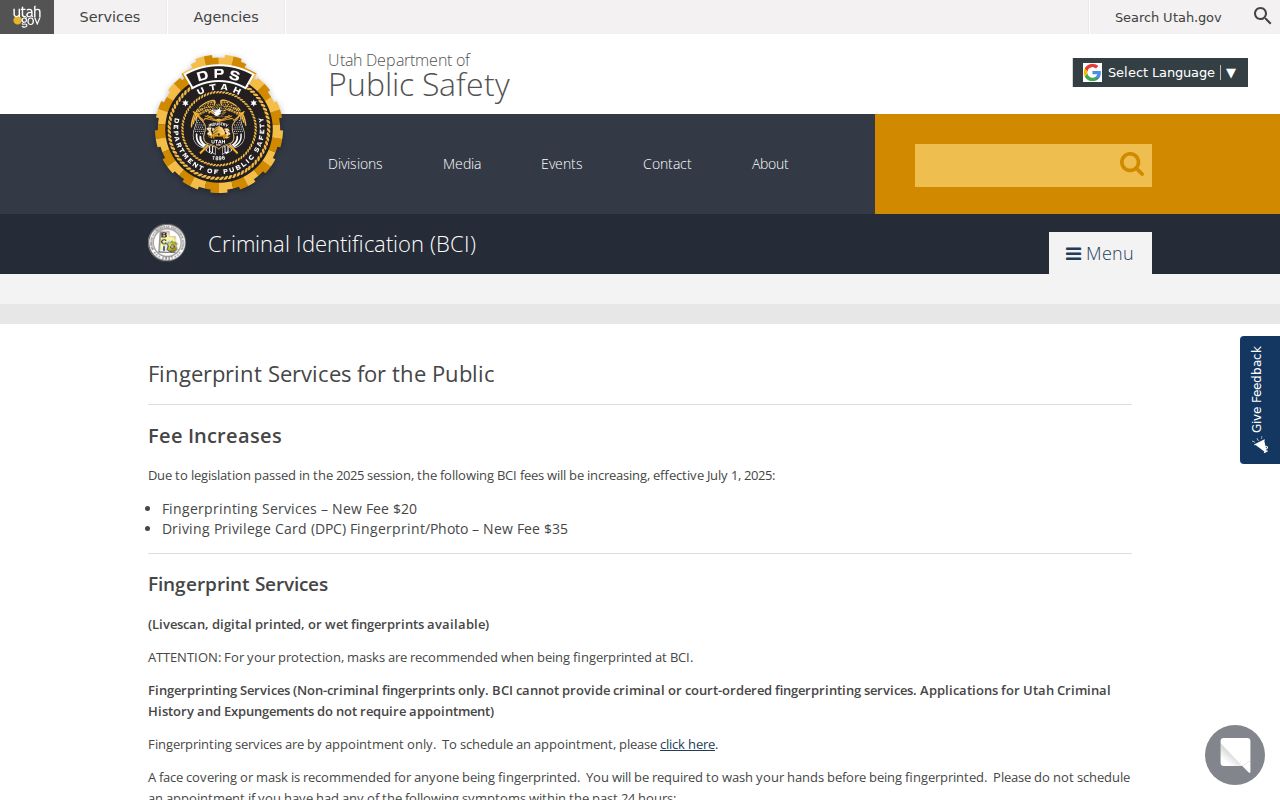
That fingerprint channel is for official self-review and other authorized purposes, not a public search by another person's name.
Garfield County Booking Photo Rules
Utah Code §17-72-802 restricts booking-photo release in publish-for-pay and protected situations. A requester may have to give a nonpublication statement. Victims may sometimes view a photograph with prosecutor consent, but they cannot retain or reproduce it under the narrow route described in the research. Garfield County therefore should not be treated as an open mugshot gallery.
Booking-photo limit: Request the underlying arrest or booking record and let the Sheriff apply Utah's current release rule. Do not assume a photograph is public.
Photos are only one part of an intake record and often the least useful part for understanding the outcome. The incident report can explain the alleged basis for arrest. Xchange can show whether a prosecutor filed charges. The court disposition can show dismissal, acquittal, plea, or conviction. Those records carry more context than an image frozen at booking.
Arrest Records vs Conviction Records
Garfield County arrest records and conviction records are created by different offices at different times. An arrest proves only that an agency took a person into custody or initiated the arrest process. A conviction requires a guilty plea or finding followed by a court judgment. Many arrest allegations change, are never filed, or end in dismissal or acquittal.
| Point | Arrest record | Conviction record |
|---|---|---|
| Creator | Arresting agency and Garfield County Jail | District or justice court |
| What it shows | An allegation, custody event, and booking facts | A guilty judgment and its disposition |
| Main access route | Jail phone, creating agency, or GRAMA | Xchange, courthouse terminal, or clerk |
| Possible end | Release, no filing, changed charge, or later case | Sentence, appeal, or qualifying expungement |
Read the court's charge-by-charge disposition before drawing a conclusion. A later judgment can differ from the booking label, and one dismissed charge should not be blended with a conviction on another count.
Note: A Garfield County arrest is not proof of guilt, and a booking charge is not a final court result.
Garfield County Arrest Subject Access
GRAMA gives the public a right to inspect public records unless a classification or restriction applies. Utah Code §63G-2-202 also allows a subject or authorized person to seek certain private records after proving identity and authority. The official subject-access statute states that boundary.
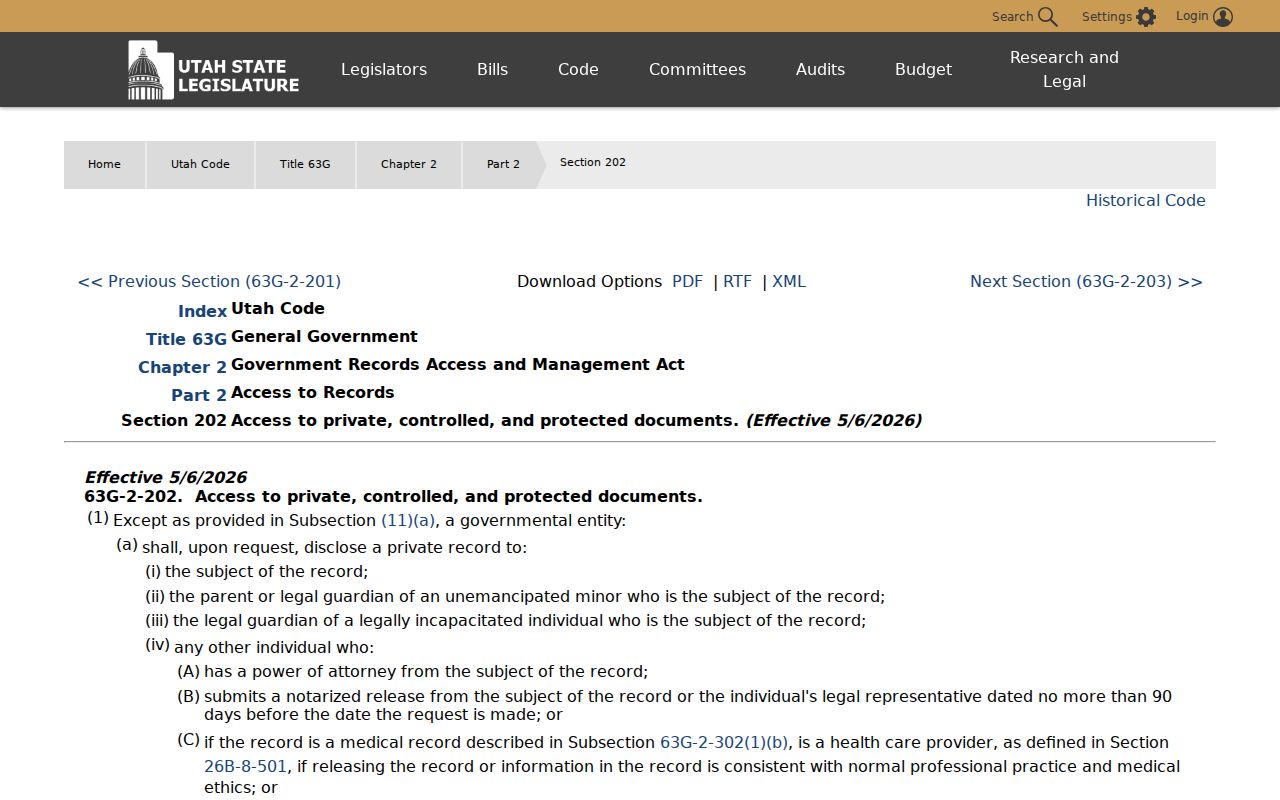
Subject status can open a lawful access route, but it does not make controlled records or another person's protected data public.
A person who sees a dismissed arrest in their own record should first identify its source. The court file, BCI history, Sheriff record, and a private publication follow different correction or expungement paths. Utah expungement can restrict ordinary access, yet it does not destroy every record. Court unlinking after some dismissals also does not erase the arresting agency's file.